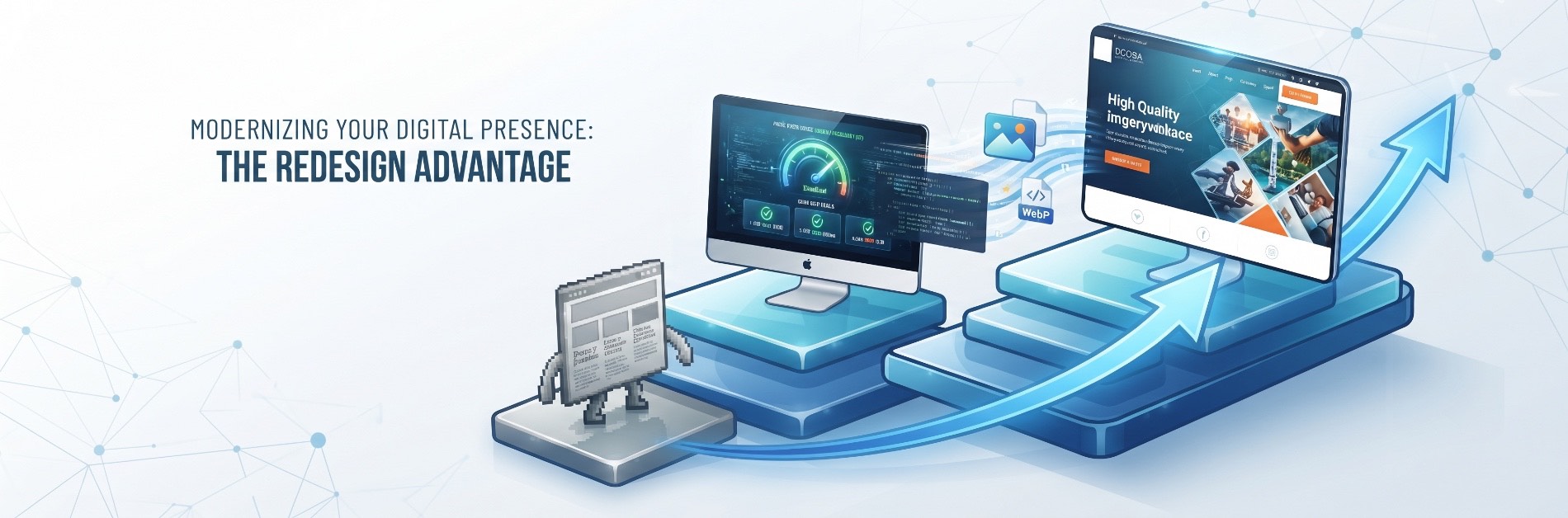
Your website is often the first interaction a potential customer has with your brand. In today’s hyper-competitive digital landscape, a static, outdated website doesn’t just look unprofessional—it actively costs you revenue, erodes consumer trust, and tanks your search engine rankings.
If you are wondering whether it’s time to overhaul your digital storefront, this comprehensive guide covers the critical indicators, Google SEO guidelines, AEO (Answer Engine Optimization) strategies, and Rank Math 100-compliance benchmarks to ensure your next redesign drives measurable growth.
What Does “AEO, SEO, GEO, and Rank Math 100” Compliant Mean?
Before diving into the signs, let’s establish what makes a modern blog post rank successfully under 2026 search standards:
- SEO (Search Engine Optimization): Ensuring traditional keyword optimization, proper heading hierarchy (
H1,H2,H3), fast loading speeds, mobile-first responsiveness, and structured metadata. - AEO (Answer Engine Optimization): Structuring your content to win Google’s AI Overviews, featured snippets, and voice search queries by directly answering “what,” “why,” and “how” questions in crisp, concise paragraphs and bulleted lists.
- GEO (Generative Engine Optimization): Tailoring content so AI-powered search engines (like ChatGPT, Perplexity, and Google Gemini) extract and cite your brand as an authoritative source.
- Rank Math 100 Compliance: Satisfying all technical and on-page SEO parameters—including focus keyword placement in the title, URL, and introduction, proper image alt tags, adequate word count, internal/external links, and readable paragraph structures.
7 Undeniable Signs Your Business Needs a Website Redesign
Recognizing when to redesign your website is critical for staying ahead of market shifts. If your web presence exhibits three or more of the following signs of an outdated website, a redesign is no longer optional—it’s an urgent business necessity.
1. Your Website is Not Mobile-Friendly
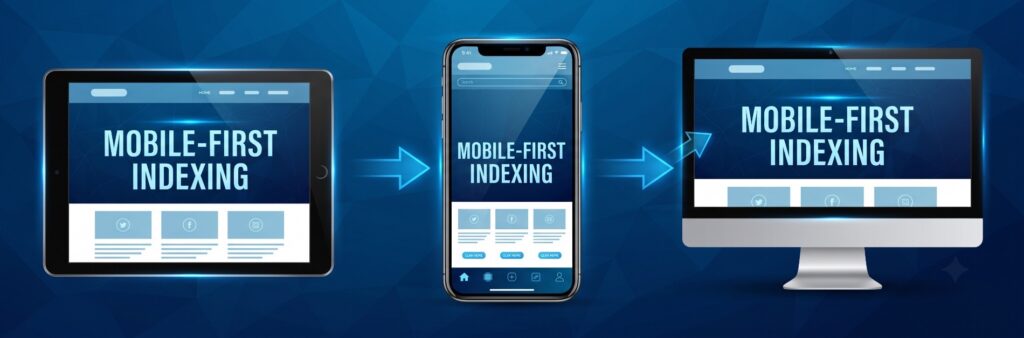
With mobile devices accounting for over half of global web traffic, Google enforces strict mobile-first indexing. This means Google predominantly uses the mobile version of your content for indexing and ranking.
- The Problem: If users have to pinch-and-zoom, encounter broken layout elements, or tap microscopic buttons, they will bounce immediately.
- The Solution: Executing a strategic mobile-first website redesign ensures seamless responsiveness across smartphones, tablets, and desktops, preventing high bounce rates that harm your search visibility.
2. Painfully Slow Page Loading Speeds
Core Web Vitals are a core component of Google’s ranking algorithm. They measure loading performance (LCP), interactivity (INP), and visual stability (CLS).
- The Problem: Bloated code, unoptimized high-resolution images, heavy plugins, or outdated hosting cause your site to load in over 3 seconds. Statistics show that 53% of mobile users abandon sites that take longer than 3 seconds to load.
- The Solution: A modern overhaul allows you to migrate to a lightweight tech stack, implement clean code architecture, use next-gen image formats (like WebP), and leverage modern content delivery networks (CDNs).
3. High Bounce Rates and Low Conversions
Your website might be getting traffic, but if visitors leave without filling out a contact form, making a purchase, or signing up for a newsletter, your site is failing its primary commercial objective.
- The Problem: Confusing navigation, weak Call-to-Actions (CTAs), cluttered layouts, or a lack of clear value propositions drive visitors away.
- The Fix: A user-centric redesign focuses on optimization pathways to improve website conversion rate, leveraging intuitive UX patterns, persuasive copywriting, and frictionless checkout or lead-capture forms.
4. Outdated Visual Design and Disconnected Branding

Design trends evolve rapidly. A website built five years ago often looks dated, clunky, or amateur compared to your current competitors.
- The Problem: If your brand has evolved, expanded its services, or updated its logo and messaging, but your website is stuck in the past, it creates brand dissonance. Consumers equate poor design with a lack of credibility, security, or product quality.
- The Trust Factor: Modern visitors judge a business’s legitimacy within seconds of landing on its homepage. A sleek, professional design instantly builds authority.
5. Difficult Back-End Management and Content Updates

Can your marketing team easily publish a blog post, change a banner, or add a new product? Or does every minor update require calling an expensive developer?
- The Problem: Outdated Content Management Systems (CMS) or custom-coded legacy sites that lack modular blocks make daily operations a nightmare.
- The Solution: Migrating to a modern CMS or flexible framework empowers your team to execute agile content marketing campaigns and keep your site fresh for search engine crawlers.
6. Security Vulnerabilities and Broken Features
Are you seeing security warnings in browsers, plugin update conflicts, or broken links and forms?
- The Problem: Older websites running on unsupported software versions or outdated plugins are prime targets for malware, hacking, and data breaches. Furthermore, browsers like Chrome actively warn users away from non-secure or broken sites.
- The Compliance Impact: Security lapses destroy customer trust and lead to immediate penalties from search engines.
7. Falling Behind Competitors in Search Rankings
Are your competitors consistently outranking you for core industry keywords, even though your product or service is superior?
- The Problem: Search engines reward sites that offer exceptional technical performance, clean semantic HTML, structured data markup (Schema), and flawless user engagement metrics. If your technical architecture is ancient, your content cannot reach its full ranking potential.
Best Practices for a Successful Website Redesign (Google SEO & Rank Math Checklist)
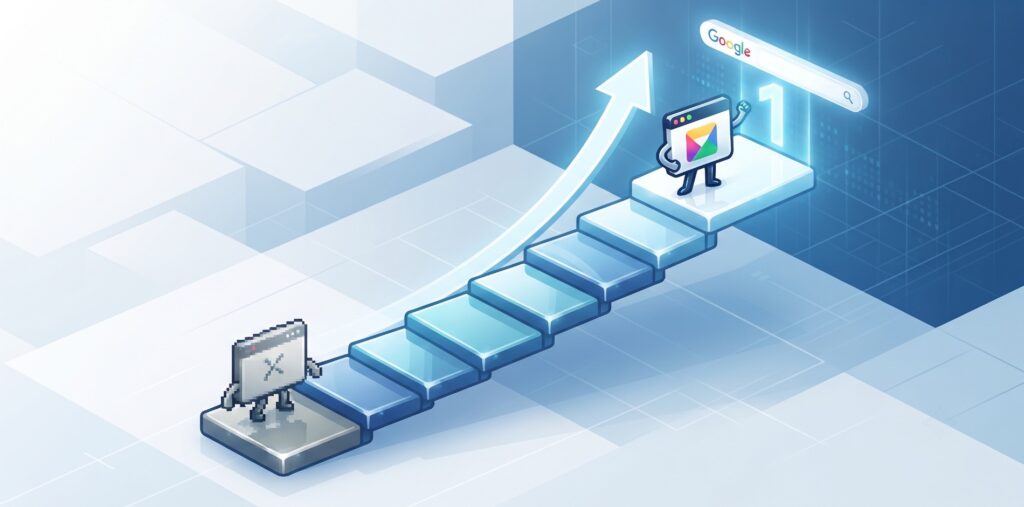
To ensure your redesign boosts your search visibility rather than destroying it, follow a comprehensive website redesign checklist and adhere to these optimization guidelines:
- Implement 3D Redirects (URL Mapping): Never change URL structures without setting up 301 redirects from old URLs to new ones. Failing to do this causes “Page Not Found” (404) errors and wipes out your existing backlink equity.
- Add Structured Data (Schema Markup): Use Organization, LocalBusiness, Breadcrumb, and Article schema to help Google and AI search engines understand your content context, increasing your chances of winning rich snippets.
- Optimize Core Web Vitals: Aim for a Largest Contentful Paint (LCP) under 2.5 seconds and zero layout shifts during page rendering.
- Prioritize Semantic HTML5: Use clean structural tags (
<header>,<nav>,<main>,<article>,<footer>) so web crawlers and AI answer engines can easily parse your content hierarchy. - Write for Humans First, Algorithms Second: Ensure answers are clear, concise, and structured with clear subheadings to capture AEO voice search and AI Overview citations.

Frequently Asked Questions (FAQ)
How often should a business redesign its website?
Generally, a business website should undergo a major redesign or structural refresh every 2 to 4 years to keep pace with evolving design standards, mobile technology, security updates, and shifts in user behavior.
Will a website redesign hurt my SEO?
A website redesign can temporarily drop your rankings if handled poorly (e.g., losing meta tags, changing URLs without 301 redirects, or introducing heavy scripts). However, working with an experienced development and SEO team ensures a smooth migration that ultimately boosts your long-term rankings and enhances business website redesign ROI.
How long does a typical website redesign take?
Depending on the complexity, scale, and e-commerce requirements of your business, a professional website redesign typically takes anywhere from 6 to 16 weeks from initial discovery and wireframing to launch.
Conclusion: Take Action Today
Your website shouldn’t just be a digital business card—it should be your most powerful 24/7 sales and lead-generation engine. If you notice any classic signs your business needs a website redesign, delaying updates is directly handing business to your competitors.
Ready to audit your digital presence and build a high-performing, revenue-generating website?
Contact our web development experts today to schedule your comprehensive website audit.
