
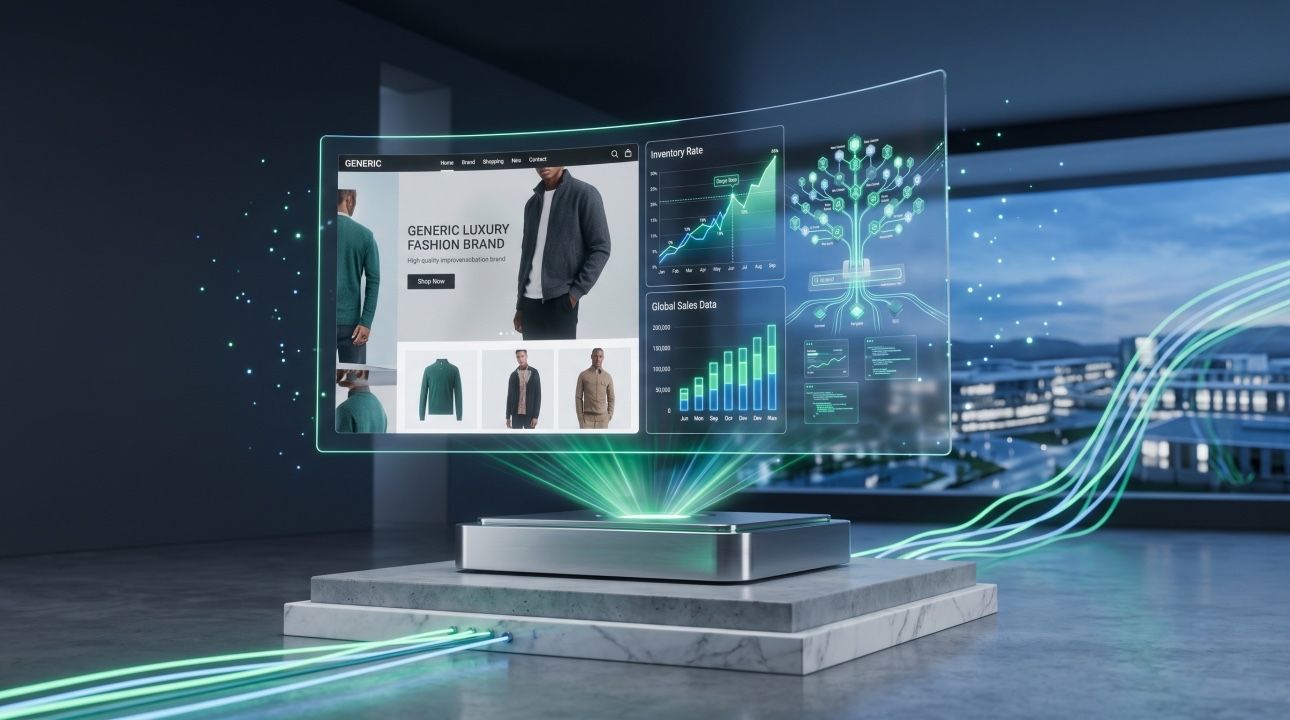
Headless Shopify for Enterprise Brands is no longer a fringe technology; it is the definitive foundation for the world’s most complex and high-performing online stores in 2026.
Let’s be brutally honest: in the hyper-competitive arena of enterprise e-commerce, your storefront is no longer just a digital catalog. Whether you are selling custom-configured furniture, high-tech consumer electronics, or a massive catalog of health and wellness subscriptions, your website is the primary engine of your business.
If a 3D product configurator stutters, if a B2B wholesale portal takes five seconds to load custom pricing, or if a global product drop crashes the browser under heavy load, the illusion shatters. The customer bounces, and you lose that revenue to a competitor whose site loaded instantly.
For years, scaling merchants across diverse industries have wrestled with a frustrating paradox on traditional e-commerce platforms like Shopify. As they bolt on the heavy integrations absolutely necessary to compete—complex inventory routing, custom ERP middleware, personalized subscription algorithms, and unified B2B/B2C portals—their site speed inevitably tanks. You are forced to choose between offering a rich, complex feature set and having a fast website.
At Rannlab Technologies, we have guided numerous enterprise brands across various sectors through this exact, painful bottleneck. We’ve seen the analytics; we know exactly how much revenue is lost to a sluggish checkout flow or a clunky product configurator. And the definitive, engineering answer to this performance paradox is migrating to a headless architecture.
This is not a fleeting trend. It is a structural evolution in how enterprise-grade digital retail is built. By severing the presentation layer (what the user sees) from the transactional engine (what processes the order), our engineering teams grant brands total technical and creative autonomy without compromising millisecond load times.
Here is exactly how this architecture is fundamentally rewriting the playbook for high-growth brands in 2026, and why partnering with a specialized IT consultancy like Rannlab is the crucial first step to getting it right.
Deconstructing the Headless Paradigm: Breaking the Monolith
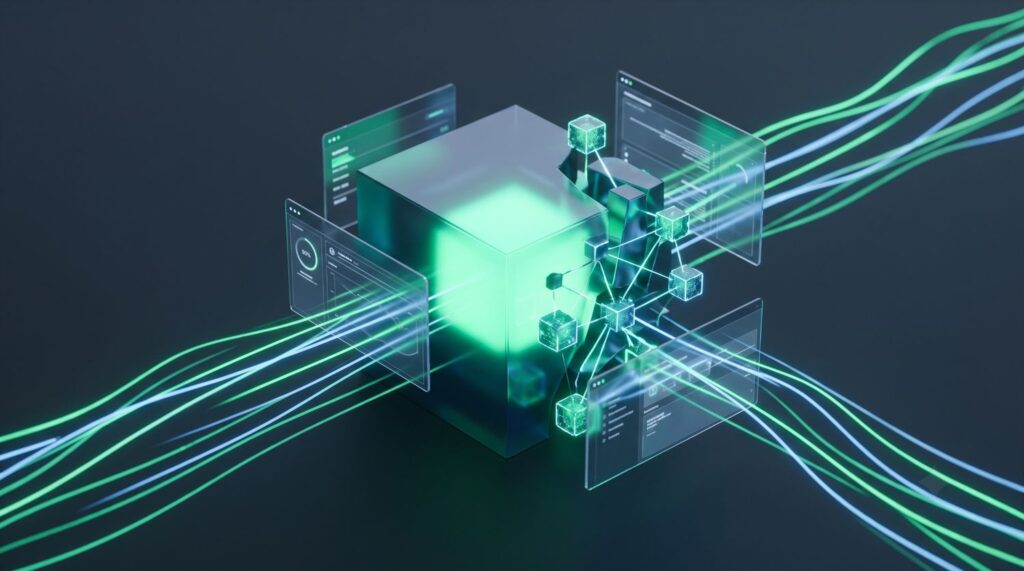
To truly understand the immense value of this approach, we must first look under the hood at the limitations of the standard model.
In a traditional, monolithic Shopify deployment, the frontend user interface and the backend database are inextricably linked. They are stitched together. When a shopper navigates to a complex product page—say, a customizable laptop or a modular sofa—the server executes a heavy, synchronous process:
- Querying the massive inventory database.
- Calculating dynamic or localized pricing.
- Processing active marketing scripts and third-party apps.
- Compiling the HTML via Liquid.
- Finally delivering the whole package to the browser.
It works for standard retail, but for complex catalogs, it’s fundamentally linear and often painfully slow.
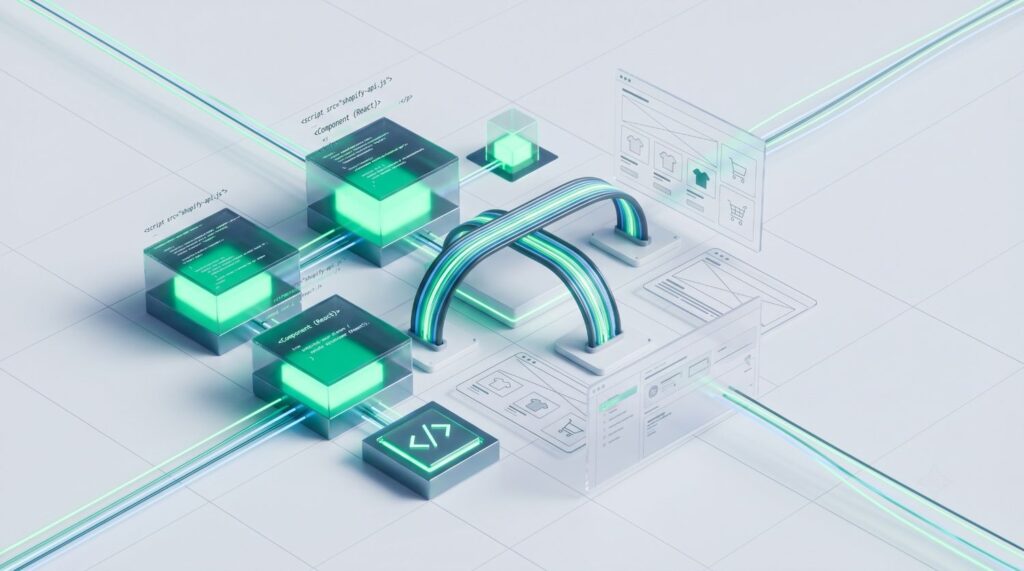
A headless commerce model shatters this monolith entirely. Here is how our architects at Rannlab structure the new reality:
- The Backend (The Engine): Shopify remains completely intact as your central nervous system. We do not replace it. It continues to ruthlessly and securely govern your inventory routing, payment gateways, checkout logic, and customer data.
- The Frontend (The Canvas): The “head” is built from scratch by our development teams using modern, blazing-fast JavaScript frameworks—most notably Next.js or React. This lives on entirely separate servers.
- The Bridge (The API): The custom frontend pulls exactly the data it needs, precisely when it needs it, via Shopify’s robust Storefront API (GraphQL).
The Rannlab Insight: By treating Shopify strictly as a headless data provider rather than a page builder, our engineers can deliver an interface that handles extreme complexity—like interactive 3D rendering or real-time B2B pricing—with the instant fluidity of a native app. We are no longer waiting for Shopify’s servers to build the page; we build the page ourselves and just ask Shopify for the data.
The Tipping Point: When Does Your Brand Actually Need This?

Let’s be clear: re-architecting an entire e-commerce infrastructure is a capital-intensive project. It requires senior engineering talent, meticulous planning, and rigorous QA testing. Standard Shopify is incredibly powerful, and we recommend it for the vast majority of standard retail businesses.
So, identifying the actual trigger point for a headless migration is crucial. We tell our clients not to do this unless they have to.
When enterprise clients approach Rannlab Technologies, they are typically hitting a ceiling that necessitates headless architecture due to the following acute pain points:
1. Complex Product Configurators (Home Goods, Automotive, Electronics)
If you sell custom furniture, PCs, or bespoke machinery, your customers need to select materials, dimensions, and specs in real-time, instantly seeing how it affects the price and visual rendering. Standard Shopify variants (capped at 100 per product) and Liquid themes choke on this level of complexity.
With a headless build, Rannlab engineers construct these configurators entirely in the frontend using React, tapping into complex third-party databases, and only sending the finalized, unified SKU to Shopify’s cart via the API. The result? Zero load-time lag while the customer builds their product.
2. Unified B2B and B2C Experiences
Many high-growth brands (especially in FMCG, hardware, and cosmetics) serve both direct-to-consumer (D2C) and wholesale (B2B) markets. Managing two separate Shopify stores creates inventory and marketing nightmares.
Headless solves this. We build a single Shopify backend, but code a frontend that completely changes its behavior based on user authentication. A regular shopper sees retail pricing and a standard flow; a logged-in wholesale distributor sees a dashboard with custom tier pricing, net-30 terms, and bulk-order matrix tables—all running on the same lightning-fast architecture.
3. The Omnichannel and Multi-Region Nightmare
Consider a rapidly scaling consumer electronics brand operating out of the US, UK, and Japan. Managing three completely separate Shopify instances to handle regional currencies, distinct inventory warehouses, and localized marketing campaigns is an operational nightmare.
A headless setup allows our IT team to maintain one single, centralized Shopify backend for you. We can then deploy three distinct, highly localized frontends that pull tailored data based on the user’s geographic IP.
4. Plugin Fatigue and the “Script Tax”
To be competitive, you likely run Yotpo for reviews, Klaviyo for tracking, a custom script for subscriptions (like Recharge), Nosto for recommendations, and perhaps a custom ERP connector.
In a standard setup, every single one of these apps injects its own JavaScript into the browser. This creates a massive “script tax” that destroys your Core Web Vitals. Your site slows to a crawl because the user’s phone is trying to process twenty different software tools at once. In a headless environment, Rannlab developers process these heavy third-party integrations server-side via APIs. We completely shield the user’s browser from the computational heavy lifting.
The Technical Foundations: Choosing the Right Framework
When Rannlab Technologies guides a brand through a headless transformation, the first critical engineering decision is the frontend tech stack. While there are many options floating around developer forums, we generally steer our enterprise clients toward two distinct, proven paths in 2026.
| Framework | Best Use Case | Hosting Paradigm | Rannlab’s Take |
|---|---|---|---|
| Next.js (Vercel) | Highly complex, composable architectures integrating multiple APIs (CMS, ERP, Shopify). | Vercel Enterprise (requires separate hosting budget). | Our gold standard for maximum flexibility. Requires manual API wiring, which our senior engineers handle flawlessly. The best choice for brands with complex data needs. |
| Shopify Hydrogen | Brands deeply committed to the Shopify ecosystem looking for faster time-to-market. | Shopify Oxygen (Included free with Shopify Plus). | Excellent for Shopify-purists. Pre-built commerce components accelerate our development timelines. Highly cost-effective for Plus merchants. |
The Next.js Advantage
For complex enterprise environments, Next.js remains the industry heavyweight. Its primary advantage lies in Incremental Static Regeneration (ISR). This is a game-changer. It allows our servers to pre-build a brand’s entire catalog as blazing-fast static HTML files.
When a user requests a page, it loads instantly because the page already exists. Meanwhile, the server checks Shopify in the background; if a price changed or an item sold out, Next.js silently rebuilds that specific page in milliseconds without disrupting the user. You get the speed of a static site with the real-time accuracy of a dynamic database.
SEO Dominance: Structuring for Search Authority
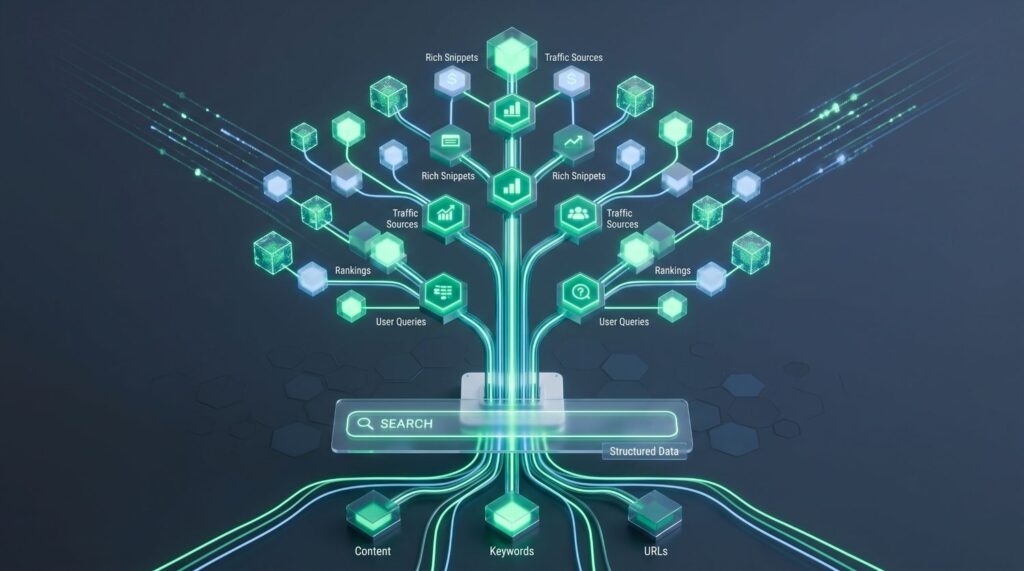
One of the most overlooked, yet financially impactful, reasons the experts at Rannlab Technologies recommend headless architecture is the absolute, granular control it provides over technical SEO.
Monolithic Shopify forces specific URL structures. If you create a collection of smart home devices, Shopify dictates the URL must look exactly like this: [brand.com/collections/smart-home](https://brand.com/collections/smart-home). For products, it often creates duplicate paths, requiring careful canonical tag management to avoid Google penalizing you for duplicate content.
Headless architecture hands complete control of the router back to our developers. We dictate the URLs, not the platform.
The SEO benefits we unlock for you are immediate and significant:
- Flat URL Architectures: We implement highly authoritative, clean paths (e.g.,
[brand.com/smart-home/thermostats](https://brand.com/smart-home/thermostats)), which pass link equity much more efficiently to sub-categories. This is how giants like Amazon and Best Buy structure their sites. - Granular Schema Markup: Rannlab developers inject highly complex, nested JSON-LD structured data. Instead of relying on a cheap app’s generic product schema, we perfectly interlink your brand entity, product reviews, localized pricing, and material attributes. This heavily increases the chances of capturing rich snippets and AI Overview features in Google Search.
- Perfecting Web Vitals: Because pages are statically generated or rendered on the server edge, the time-to-first-byte (TTFB) drops dramatically. As search algorithms increasingly prioritize user experience metrics, this raw speed directly correlates to higher organic rankings.
The Reality Check: Budgeting, Timelines, and Maintenance

At Rannlab Technologies, we believe in total transparency. It is our responsibility as your technology partner to be clear about the financial and operational realities of this architecture. Headless commerce is a bespoke software development project, not a weekend theme swap.
If an agency tells you they can “go headless” in a month for $10,000, they are lying to you, and the resulting site will be a fragile nightmare.
Investment and Timelines
A successful migration for a high-volume brand will typically command an initial development investment depending on the complexity of middleware integrations. Do you need us to connect a legacy SAP ERP? Do you want a bespoke headless CMS setup via Sanity or Contentful to manage your landing pages? These add complexity.
The timeline usually spans three to six months of rigorous planning, coding, and QA. We do not rush this. We spend weeks just mapping out the data flow and the 301 redirect strategy to ensure you don’t lose a single drop of SEO traffic when we flip the switch.
The Shift in Maintenance
Furthermore, a headless build permanently alters a brand’s operational model. Your marketing team can no longer simply buy a generic popup app from the Shopify store and install it with one click.
Because we have decoupled the frontend, those apps no longer have a place to inject their code. Every new feature, widget, or data tracking script must be purposefully coded into the React frontend.
This is exactly why brands partner with Rannlab Technologies on an ongoing retainer—we act as your dedicated, on-demand engineering department to continuously iterate, maintain, and scale your custom storefront. You dream up the business logic; we write the code to make it happen flawlessly.
Ready to Elevate Your Digital Flagship?
For standard retailers, traditional Shopify is more than sufficient. We love it.
However, for ambitious brands pushing high transaction volumes, managing complex product matrices, expanding globally, or bridging B2B and D2C, the traditional monolith eventually becomes a serious liability. It holds you back.
Headless Shopify for Enterprise Brands is the architectural foundation that allows a company to finally decouple their operational goals from backend software constraints. It is a serious investment in uncompromised speed, bulletproof technical SEO, and the freedom to engineer a retail experience that is as innovative as the products you sell.
Are you ready to break free from theme constraints and build a lightning-fast custom storefront?
Contact the enterprise e-commerce engineering experts at Rannlab Technologies today to schedule a deep-dive architecture consultation. Let’s sit down, review your current bottlenecks, and build the future of your brand, together.
