
The modern digital learning landscape is shifting beneath our feet. In 2026, the era of “one-size-fits-all” training is officially over. Today’s learners—whether they are corporate employees navigating hybrid work or students in higher education—expect digital experiences that are as intuitive, adaptive, and relevant as the consumer apps they use in their daily lives.
When training is generic, it is ignored. When training is tailored, it transforms performance. This is why the adoption of Moodle LMS personalized eLearning has become the primary differentiator for organizations that succeed in the current competitive climate. By leveraging the flexibility, open-source architecture, and robust AI capabilities of Moodle 5.2, businesses and educational institutions are moving beyond static content repositories to create dynamic, growth-focused digital ecosystems with the help of experts like Rannlab Technologies.
The Evolution of Training: Why Personalization Matters in 2026
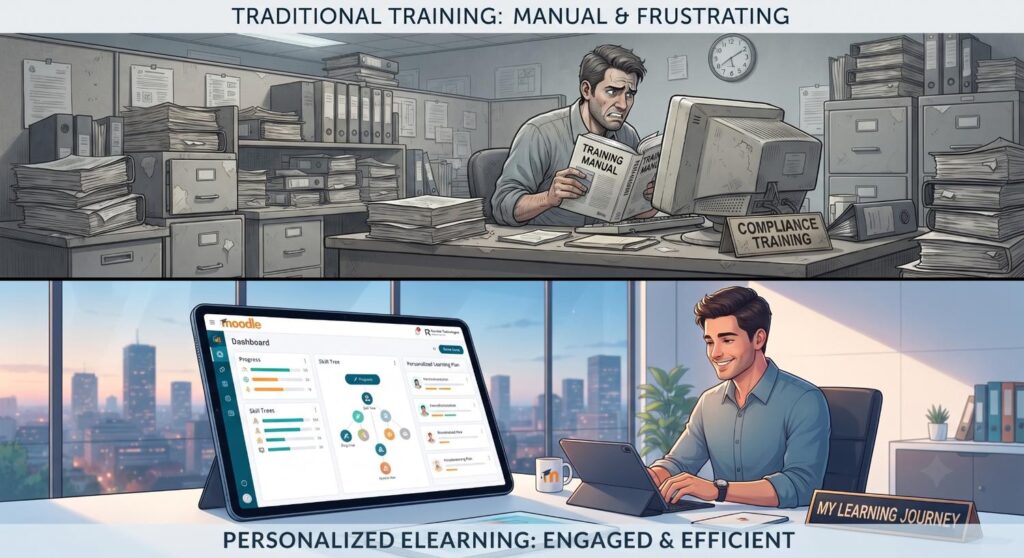
The fundamental problem with traditional eLearning is a lack of relevance. When an employee is forced to watch a 60-minute compliance video that covers information they already know, they disengage. When a student is stuck in a linear course sequence that doesn’t respect their existing skill set, they lose motivation.
Personalized learning flips this model. It acknowledges that every learner brings a unique history, a specific set of goals, and a distinct preferred pace. By implementing a system that recognizes these differences, organizations can:
- Accelerate Time-to-Competency: Learners focus only on the gaps they actually have, bypassing redundant content.
- Increase Engagement: When content feels relevant, learners are more likely to interact with it, complete assessments, and apply what they have learned.
- Drive Better Business Outcomes: From reduced turnover in corporate settings to improved assessment scores in academic environments, personalized learning correlates directly with measurable success metrics.
Core Features of Moodle LMS Personalized eLearning
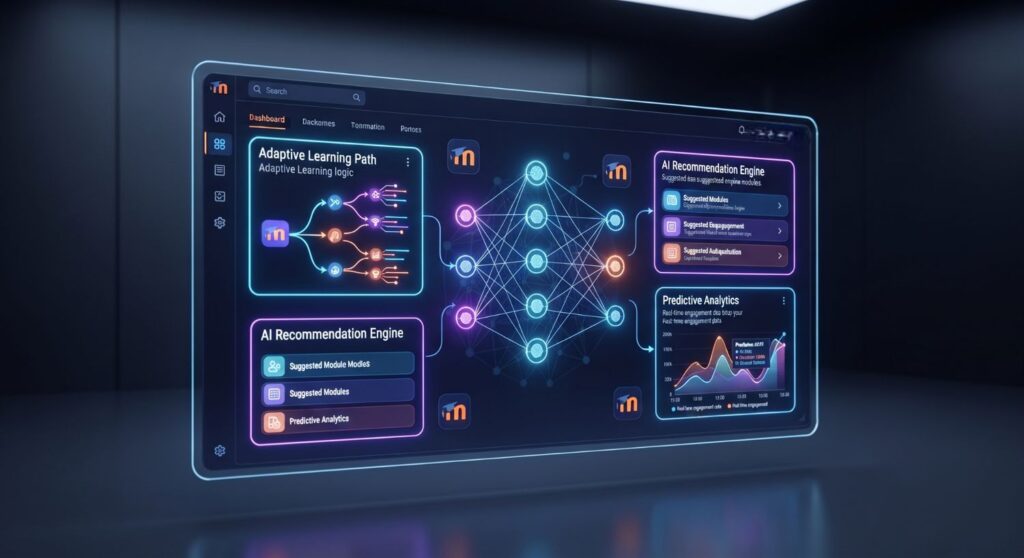
With the release of Moodle 5.2 in April 2026, the platform has introduced a suite of tools that make personalization more attainable than ever. Rannlab Technologies specializes in implementing these core features to transform your platform into an intelligent, data-driven engine.
1. Adaptive Learning Pathways
The heart of Moodle LMS personalized eLearning is the ability to create non-linear journeys. Using conditional access and completion tracking, Moodle allows administrators to build “if-this-then-that” logic into their courses. If a learner passes an initial diagnostic quiz with high marks, the system can automatically unlock advanced modules, skipping the basic foundational content. If they struggle, the system can automatically suggest remedial resources or prerequisite training.
2. AI-Powered Recommendations
Moodle 5.2 has integrated powerful AI providers, including Gemini and AWS Bedrock, directly into the core. Administrators can now automate the content recommendation engine. If an employee shows interest in leadership training, the system can suggest specific, high-impact modules or external articles that align with their career aspirations. Rannlab Technologies helps organizations configure these AI integrations to ensure they work seamlessly with your existing curriculum.
3. Data-Driven Insights and Predictive Analytics
Personalization is impossible without data. Moodle 5.2 provides advanced reporting tools that go far beyond simple completion rates. Predictive analytics can identify learners who are at risk of disengagement before it happens. By monitoring patterns—such as time-on-task, quiz performance, and frequency of logins—administrators can intervene proactively, offering support or adjusting the learning path to keep the user on track.
Industry-Specific Use Cases with Rannlab Technologies

One of the greatest strengths of Moodle is its versatility. It does not force industries to adapt to the software; it allows the software to adapt to the industry. Rannlab Technologies brings 10+ years of domain experience to ensure your implementation is perfectly aligned with your sector’s requirements.
Corporate Training and Upskilling
In the corporate sector, the focus is on ROI. Organizations are using Moodle to create “Learning in the Flow of Work.” By integrating Moodle with HRIS systems and communication tools like Microsoft Teams and Slack, training becomes part of the daily workflow rather than a separate chore. For onboarding, new hires receive a personalized checklist that adapts as they complete tasks, ensuring they are productive within days rather than weeks.
Healthcare and Compliance
Healthcare organizations face a unique challenge: training must be both highly personalized for staff and strictly documented for regulators. Rannlab Technologies’ robust expertise in healthcare IT ensures that your Moodle setup includes the necessary certification management and role-based access control (RBAC) to handle the audit trails required for compliance, while providing a seamless experience for doctors and nurses.
Higher Education and Blended Learning
Universities are leveraging Moodle to facilitate the “flipped classroom.” Students access personalized, self-paced pre-work via Moodle, allowing them to arrive at live sessions—or join virtual ones—ready for deep discussion. The system supports complex collaborative grading, meaning multiple instructors can grade the same assignment, providing diverse, personalized feedback that helps students grow.
The Technical Edge: Why Architecture Matters
While features are vital, the technical foundation of Moodle is what makes it a sustainable choice for 2026.
- Open-Source Freedom: Unlike SaaS platforms that lock you into their roadmap and pricing, Moodle’s open-source nature means you own your platform. Rannlab Technologies provides custom development that prevents “vendor lock-in” and ensures your investment grows with you.
- Scalability: As organizations manage thousands of users globally, Moodle’s architectural refinements in version 5.2—such as improved caching and database optimization—ensure that the platform remains stable and performant. Rannlab ensures your infrastructure is tuned for these high loads.
- Security and Integration: With Moodle’s comprehensive API framework, connecting your LMS to your CRM, payment gateways, or enterprise security protocols is seamless. In an age of data sovereignty, Rannlab Technologies implements secure SDLC frameworks to ensure your data remains protected.
Implementation Guide: Transitioning to Personalized eLearning

Moving to a personalized model does not happen overnight. It requires a strategic approach. Here is how to begin:
- Start Small: Don’t try to personalize every course at once. Select a single, high-impact area—such as new-hire onboarding—and apply adaptive learning logic to that module.
- Audit Your Content: Review your existing materials. Can they be broken down into microlearning chunks? Can you map them to specific skills or competencies?
- Partner with Experts: Rannlab Technologies doesn’t just “install” Moodle; we engineer it. From Moodle customization to complex plugin development, our engineers ensure the platform reflects your specific operational goals.
- Listen to Learner Feedback: Personalization should be a dialogue. Use Moodle’s forum, survey, and feedback features to ask learners what they need, and use that qualitative data to refine your paths.
Conclusion: Partnering for Future Growth
Moodle has matured from a simple course management system into a robust, future-ready digital ecosystem. In 2026, the question for leaders is no longer whether they need an LMS, but how well their LMS can adapt to the human element of learning.
By prioritizing personalization, organizations move from treating learning as a compliance requirement to treating it as a competitive advantage. Your employees and students are your most valuable assets; providing them with a platform that respects their time, challenges their intellect, and maps to their individual career growth is the smartest investment you can make.
Ready to modernize your training platform?
At Rannlab Technologies, we specialize in Moodle development, customization, and migration. We help organizations turn training into a competitive advantage by building tailored, future-ready learning ecosystems.
Frequently Asked Questions (FAQ)
Q: Why is Moodle LMS still the most popular choice in 2026?
A: Moodle remains the top choice because it perfectly balances enterprise-grade stability with open-source flexibility. Its architecture allows organizations to build unique, adaptive environments without the prohibitive licensing costs of proprietary SaaS systems, while its 5.2 updates bring modern AI capabilities to the forefront.
Q: Does Moodle LMS support personalized learning paths?
A: Yes. Moodle allows administrators to create adaptive learning experiences. By using completion tracking, conditional access, and automated course recommendations, you can ensure each learner receives a training experience tailored to their specific role, current skill gaps, and individual progress.
Q: Is Moodle LMS secure enough for enterprise use?
A: Absolutely. Moodle is built with security at its core. It supports GDPR compliance, multi-factor authentication (MFA), secure user authentication, role-based permissions, and encrypted data transmission. Rannlab Technologies further enhances this with our secure SDLC processes.
Q: Can Moodle integrate with my existing business tools?
A: Yes. Moodle offers seamless integration capabilities with Microsoft 365, Google Workspace, Zoom, MS Teams, HRIS systems, and various CRMs. This creates a unified “learning ecosystem” where data flows freely between your training platform and your daily business applications.
Q: How does Moodle LMS personalized eLearning improve learner engagement?
A: By leveraging AI-driven content suggestions, sophisticated gamification, and mobile-responsive design, Moodle ensures that training is meaningful. When learners interact with content that is relevant to their specific career path, completion rates and retention increase significantly compared to generic “one-size-fits-all” training.
