Introduction
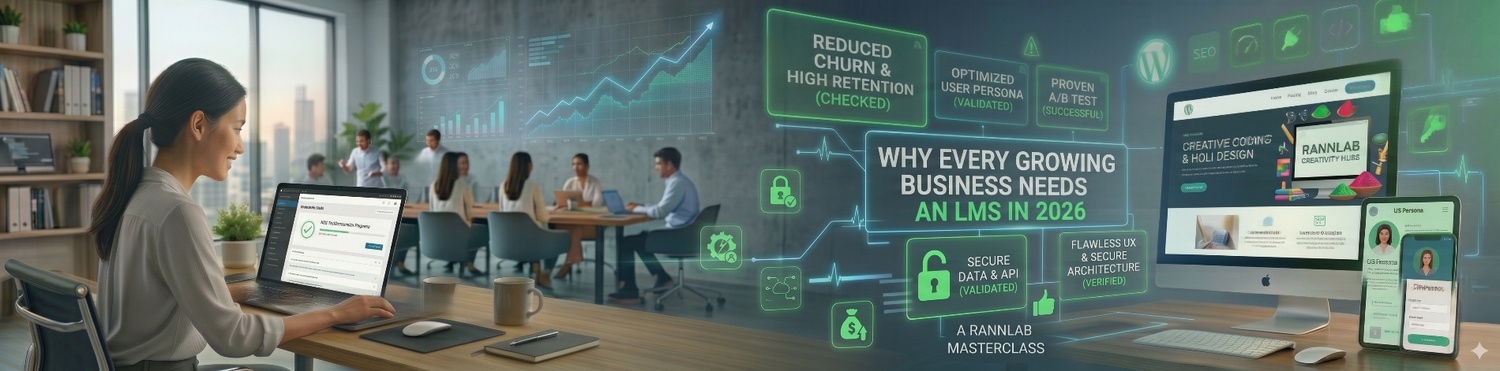
If you’re running a growing business, adopting an LMS in 2026 is no longer optional—it’s the foundation for building a modern, skilled, productive workforce. Traditional training simply cannot keep up with fast-changing skills, hybrid work models, and rising customer expectations.
Whether you run a startup or a multi-location enterprise, an LMS helps you train people faster, keep them engaged longer, and ensure everyone in your organization learns the same thing the same way—at scale.
In this blog, we’ll explore not just the technical advantages, but the real human reasons every business now needs a modern learning management system.
What Makes LMS Essential for Growing Businesses in 2026?
A modern LMS in 2026 centralizes all training, automates onboarding, improves knowledge retention, and supports fast business expansion. It allows employees to learn anytime, managers to track progress instantly, and companies to maintain training consistency across locations.
Most businesses today face the same struggle:
Training is scattered.
Knowledge stays stuck with a few individuals.
New hires take too long to become productive.
An LMS solves all of this by functioning as a single learning hub for your entire organization.
Key Benefits You Immediately Experience
- All training content stored in one place
- Employees learn at their own pace
- Managers get real-time progress reports
- No repeated classroom sessions
- No missed compliance deadlines
- Easy onboarding for remote or hybrid teams
Rannlab Insight:
Companies that shift to an LMS experience 40–60% faster employee ramp-up time within the first year.
The Human Side: How an LMS Improves Productivity & Motivation
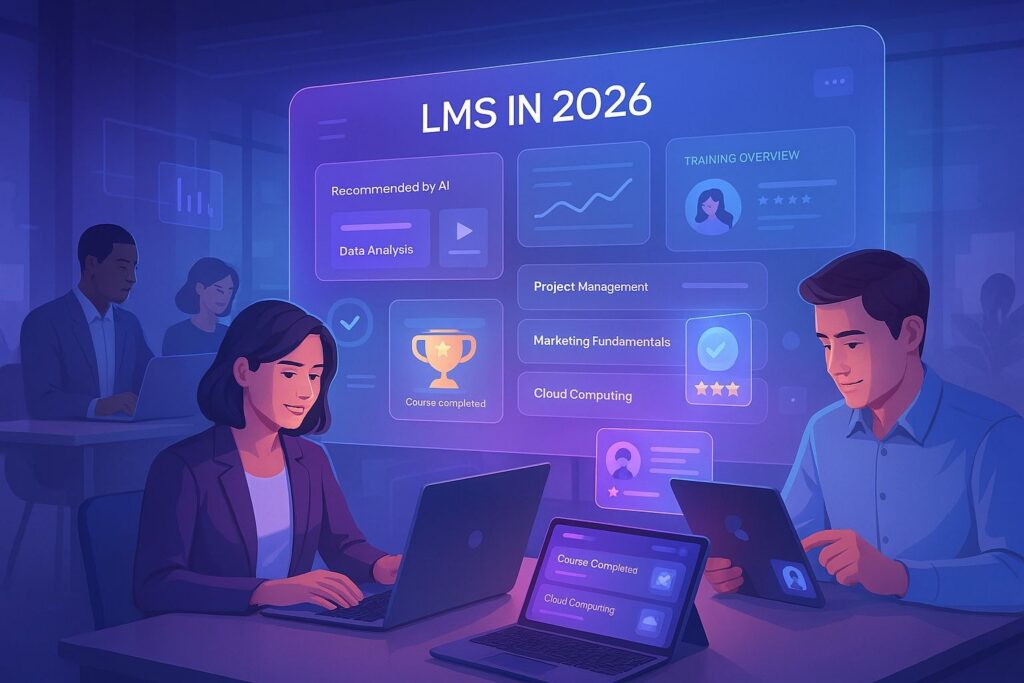
An LMS in 2026 improves productivity by providing personalized learning paths, AI‑recommended courses, and interactive modules that keep employees engaged and motivated. It turns training from a boring task into a rewarding experience.
Think about the last time employees sat through a 3-hour in-person training.
Most forget half of it the next day.
But with LMS-powered microlearning:
- Lessons become shorter and easier to understand
- Training becomes flexible, not forced
- Progress feels rewarding, not overwhelming
How an LMS Helps Employees Do Better Work
- Personalized courses based on job role
- Gamification: points, badges, leaderboards
- Short, bite-sized microlearning videos
- AI-driven skill suggestions
- Mobile-first learning for on-the-go employees
Why This Matters
Learning should empower people—not burden them. When employees feel supported, they perform better, stay longer, and deliver more value to customers.
Pro Tip:
Add short quizzes after every learning unit. It boosts retention by up to 75%.
Why LMS is Critical for Compliance, Safety & Policy Training
In 2026, businesses face stricter compliance, safety, and data protection rules. An LMS ensures everyone completes mandatory training on time, while automated reports make audits effortless.
Whether you are in manufacturing, IT, logistics, or education—compliance isn’t optional.
And manual tracking is a nightmare.
What an LMS Does Perfectly
- Assigns required training automatically
- Sends reminders until completed
- Maintains audit-ready records
- Helps avoid legal penalties
- Tracks who hasn’t completed training
Comparison: LMS vs Traditional Training
| Feature | LMS | Offline Training |
|---|---|---|
| Tracking | Automated | Manual, error-prone |
| Engagement | Interactive | Mostly boring |
| Delivery | Anywhere | Classroom only |
| Cost | Lower long-term | Expensive, repetitive |
| Reporting | Real-time | Slow and incomplete |
Scaling a Business? An LMS Helps You Grow Faster
Growing businesses need consistent, scalable training. An LMS in 2026 lets you onboard employees faster, maintain learning quality across locations, and reduce dependency on trainers—allowing your organization to scale smoothly.
Growth brings challenges:
More employees, more branches, more processes, more trainings.
Without a system, training collapses.
How an LMS Supports Business Expansion
- Add unlimited users as you grow
- Train remote teams without extra cost
- Standardize training across all locations
- Duplicate onboarding programs instantly
- Reduce manager frustration and workload
Rannlab Insight:
Fast-scaling companies using LMS reduce training time per employee by up to 45%.
AI‑Powered LMS: The Future of Learning Has Arrived
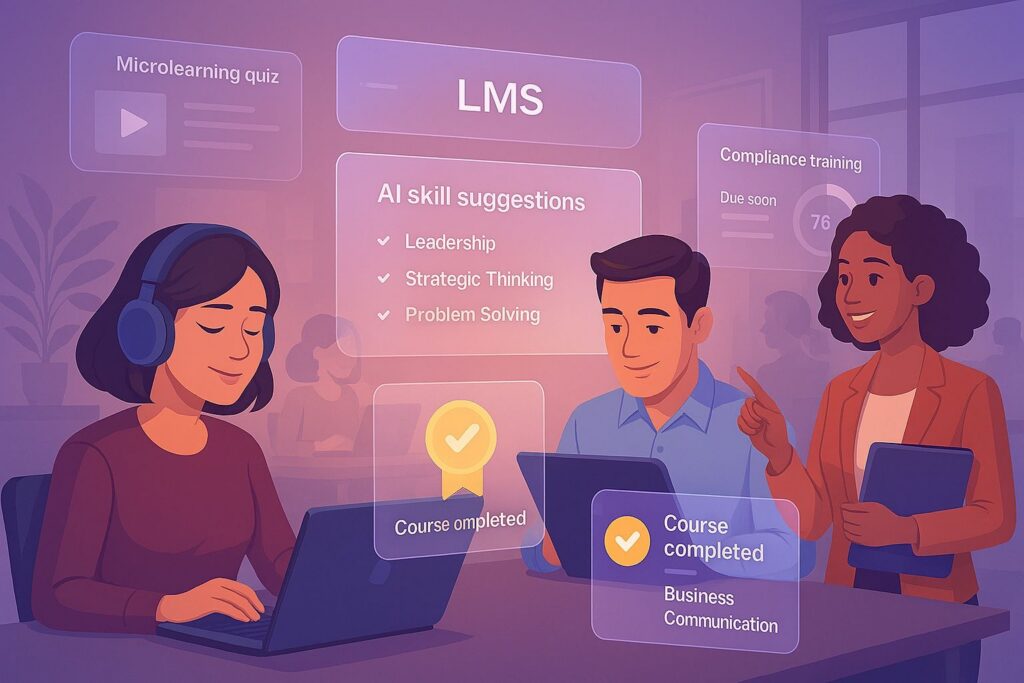
AI transforms how learning works in 2026. AI‑powered LMS systems predict skill gaps, recommend personalized courses, and automate content generation—saving hours of manual effort.
AI Features That Are Revolutionizing Training
- AI-generated personalized learning paths
- Predictive analytics showing future skill needs
- Smart quiz & assignment generation
- Chatbot assistance for 24/7 learner support
- Automatic tagging and organising of content
This is not the LMS of 2010.
This is an intelligent learning partner.
Cost Savings & ROI of Implementing an LMS
An LMS delivers ROI by lowering training costs, reducing onboarding time, minimizing compliance penalties, and eliminating repeat classroom training sessions.
Where Businesses Save the Most
- Trainer fees
- Travel and accommodation costs
- Time wasted in repeated sessions
- Compliance fines
- Printing & physical materials
Simple ROI Formula
ROI = (Training Benefits – Training Costs) / Training Costs
Pro Tip:
Reuse digital content regularly. It keeps training fresh without rebuilding everything from scratch.
FAQs
What is an LMS in 2026 and how is it different?
An LMS in 2026 is more advanced, AI-driven, and employee-friendly. It personalizes learning, automates tasks, and provides deep analytics unavailable in older systems.
Why do growing businesses need an LMS the most?
Because growth demands scalable training. An LMS ensures every new employee learns the same information consistently, quickly, and efficiently.
Is LMS suitable for small businesses too?
Absolutely. Cloud LMS solutions are affordable and can help small teams grow faster with structured training.
Does an LMS really improve employee performance?
Yes. With personalized learning, micro-courses, and real-time feedback, employees learn faster and deliver higher-quality work.
Conclusion
A modern LMS in 2026 does more than deliver training—it strengthens culture, enhances productivity, protects your business from compliance risks, and helps teams grow with clarity and consistency.
If you’re ready to upgrade your training experience and future-proof your organization, Rannlab can help you build a powerful, scalable LMS tailored to your needs.
