
Introduction
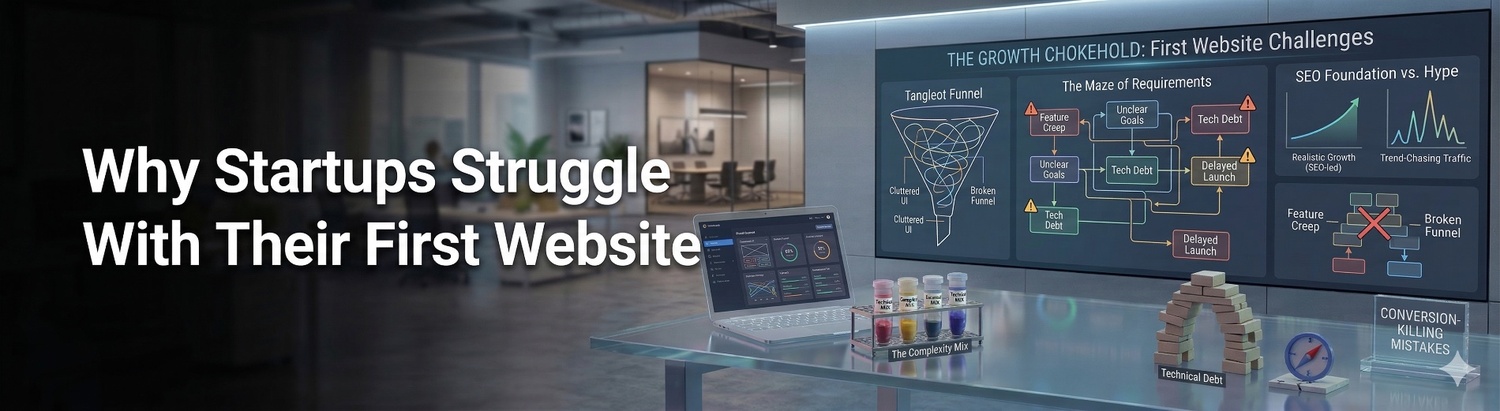
Startup website challenges begin much earlier than most founders realize. For many startups, the first website is built under pressure—limited budgets, tight deadlines, and unclear positioning. The focus is often on “launching something” rather than building something that actually works.
A startup website is not just a digital presence. It is a trust engine, lead generator, sales assistant, and brand validator—all rolled into one. When it lacks strategy, clarity, and structure, it quietly kills growth. Visitors don’t understand the product. Search engines don’t rank the pages. Leads don’t convert.
In this long‑form guide, we break down why startups struggle with their first website, the hidden mistakes most founders make, and proven, practical solutions that help startups build websites that scale with growth.
1. Lack of Clear Website Strategy
One of the most common startup website challenges is building a website without a defined strategy. Without clarity on goals and audience, even well‑designed sites fail.
Many startups begin with design mockups instead of business questions. They focus on colors, animations, and layouts before deciding what success actually looks like.
Why This Happens
- Founders rush to “look professional”
- No alignment between marketing and product
- Website goals are undefined
What This Causes
- High bounce rates
- Confused visitors
- No measurable ROI
Strategic Solution
- Define one primary website goal (leads, demos, signups)
- Identify a single core audience
- Align every page to one stage of the buyer journey
A startup website without strategy is like a sales team without a script.
2. Weak or Unclear Value Proposition
An unclear value proposition is a critical startup website challenge that causes visitors to leave within seconds.
If users can’t understand what you do, who it’s for, and why it matters within five seconds, they won’t scroll.
Common Value Proposition Mistakes
- Buzzwords instead of benefits
- Feature‑heavy messaging
- No differentiation
How to Fix It
Use this proven formula above the fold:
We help [target audience] achieve [primary benefit] without [main pain point].
Example:
“We help early‑stage startups generate qualified leads without wasting money on ads.”
Add:
- One supporting sentence
- One proof element (client, stat, or testimonial)
3. Overdesigned but Underperforming UI
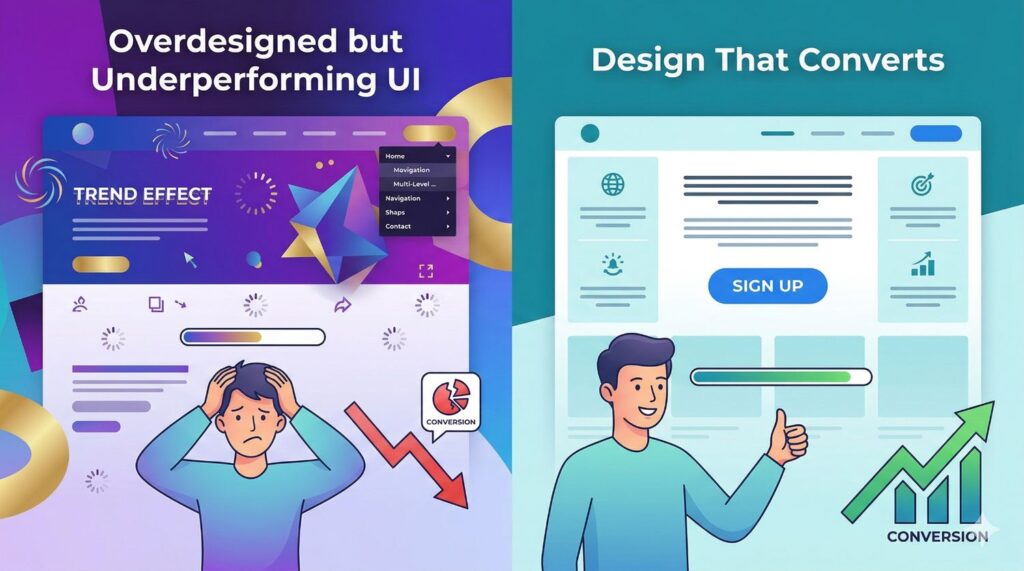
Many startup website challenges come from prioritizing aesthetics over outcomes.
Startups often copy large brands with heavy animations and complex layouts. This hurts speed, clarity, and conversions.
Design Pitfalls
- Excessive animations
- Trend‑driven layouts
- Style over substance
Design That Converts
- Simple layouts
- Clear visual hierarchy
- Content‑first design
| Design Approach | Result |
|---|---|
| Fancy animations | Lower speed |
| Clean layout | Higher conversions |
| Minimal colors | Better readability |
4. Poor User Experience and Navigation
Poor UX is one of the most underestimated startup website challenges.
If users struggle to find information, they won’t trust the product.
UX Issues Startups Face
- Too many menu items
- Long text blocks
- No mobile optimization
UX Best Practices
- Limit navigation to 5–6 links
- Use short sections and bullets
- Design mobile‑first
If a user needs to think, you’ve already lost them.
5. Ignoring SEO From Day One
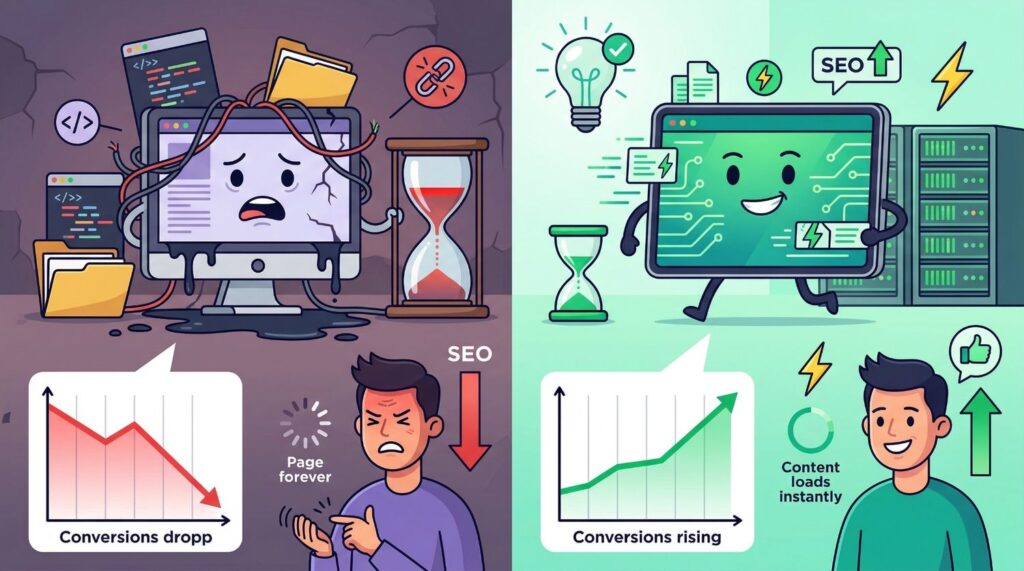
Ignoring SEO early is one of the most expensive startup website challenges long‑term.
Most startups treat SEO as a future task. This leads to broken site structures and missed organic growth.
SEO Mistakes
- No keyword research
- Random page creation
- Missing meta tags
SEO‑First Solutions
- Keyword‑mapped pages
- Proper H1–H3 structure
- Internal linking
6. Slow Performance and Technical Debt
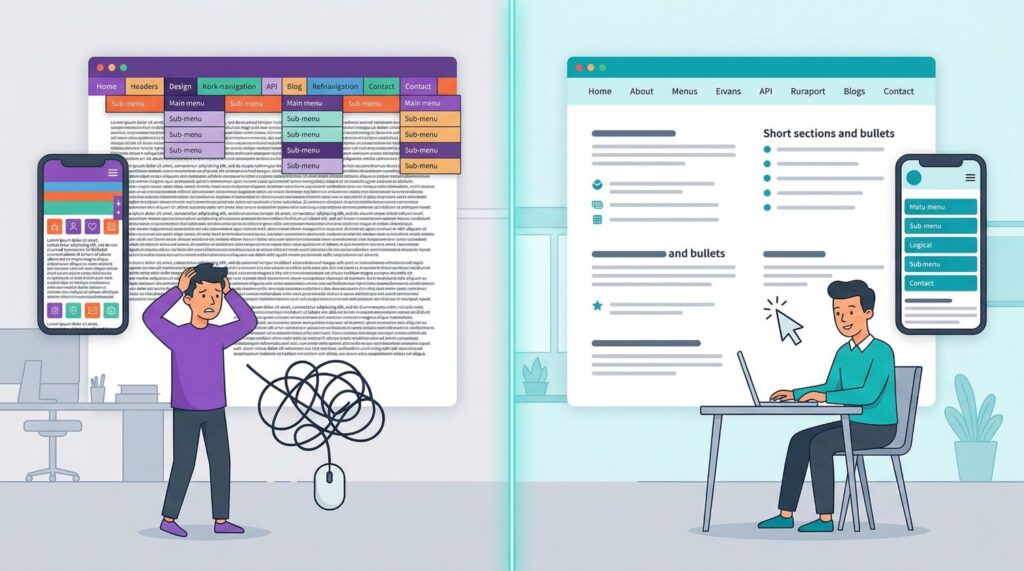
Performance issues are a silent startup website challenge that impact trust, SEO, and conversions.
Why Speed Matters
- Faster sites rank better
- Users associate speed with reliability
- Conversions drop sharply after 3 seconds
Fix Performance Issues
- Optimize images
- Use reliable hosting
- Reduce plugins
7. Missing Trust and Credibility Signals
Low trust is one of the biggest startup website challenges, especially for new brands.
What Visitors Look For
- Who is behind this company?
- Can I trust them?
- Are others using it?
Trust Builders
- Founder story and photos
- Testimonials or early users
- Contact details
People trust people before they trust products.
8. No Clear Conversion Funnel or CTA
Without clear CTAs, startup website challenges turn traffic into wasted opportunity.
Common CTA Errors
- Multiple CTAs
- Vague button text
- Poor placement
High‑Converting CTA Framework
- One primary CTA per page
- Action‑oriented text
- Repeated every 2–3 sections
9. Treating the Website as a One‑Time Project
A major startup website challenge is treating the website as “done” after launch.
Websites should evolve with:
- Product updates
- Customer feedback
- Market changes
Growth‑Driven Website Approach
- Monthly optimization
- A/B testing CTAs
- Content updates
FAQs
What are the most common startup website challenges?
The most common startup website challenges include unclear messaging, poor UX, missing SEO, slow speed, weak trust signals, and no conversion strategy.
How much should a startup invest in its first website?
The focus should be ROI, not cost. A strategic website often pays for itself through leads and conversions.
Should startups focus on SEO or design first?
Both must work together. SEO brings traffic; design converts it.
How long does it take for a startup website to show results?
With proper SEO and CRO, results typically appear within 60–90 days.
Conclusion & CTA
Startup website challenges are rarely technical—they are strategic. A startup’s first website sets the tone for trust, growth, and credibility. When built with clarity, SEO, UX, and conversions in mind, it becomes a powerful growth engine.
If your startup website is not generating leads, rankings, or confidence, it’s time to rethink your approach.