
Introduction
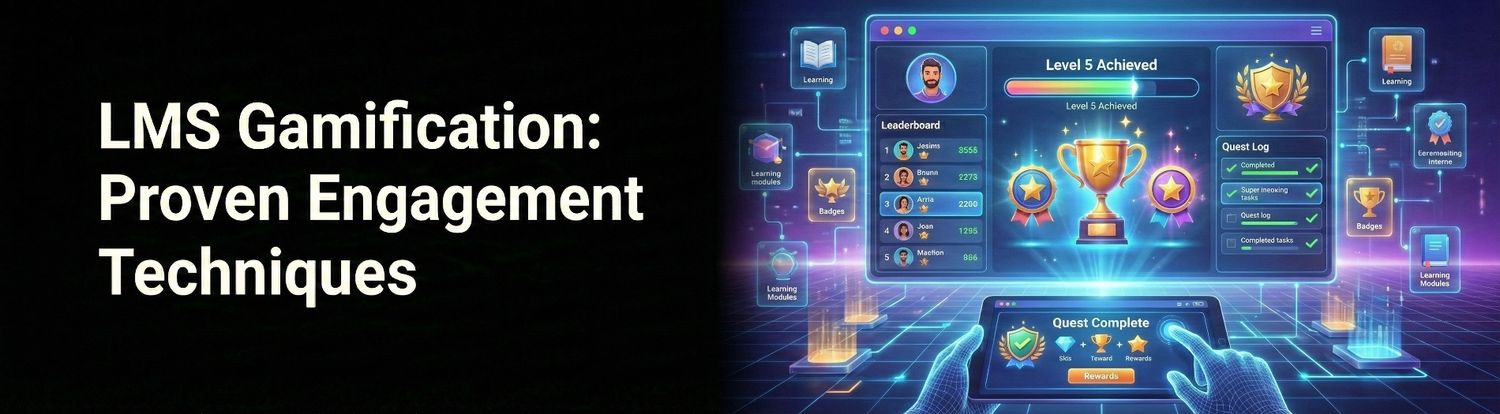
LMS gamification is transforming how students interact with digital learning platforms by making the experience more engaging, interactive, and goal-driven. Today’s learners expect more than static content—they want dynamic challenges, immediate feedback, and a sense of progress. Gamification integrates game mechanics like points, achievements, rewards, and missions into an LMS to increase motivation and participation.
This blog explores expanded, actionable techniques institutions can adopt to enhance student engagement using LMS gamification—complete with practical examples, UX insights, and implementation strategies.
What Is LMS Gamification?
LMS gamification is the process of adding game-like elements—such as points, badges, levels, leaderboards, challenges, and rewards—to a learning management system. The purpose is to boost motivation, participation, and knowledge retention by making learning more interactive and enjoyable. Gamification transforms passive study into an active, achievement-driven experience.
Gamification works because it taps into human psychology: rewards, recognition, progress tracking, and friendly competition.
Why Gamification Boosts Student Engagement
Gamification increases engagement by activating intrinsic motivators such as mastery, autonomy, progress, and curiosity. When students feel rewarded for learning and see visible progress, they stay more consistent, complete tasks faster, and enjoy the learning process.
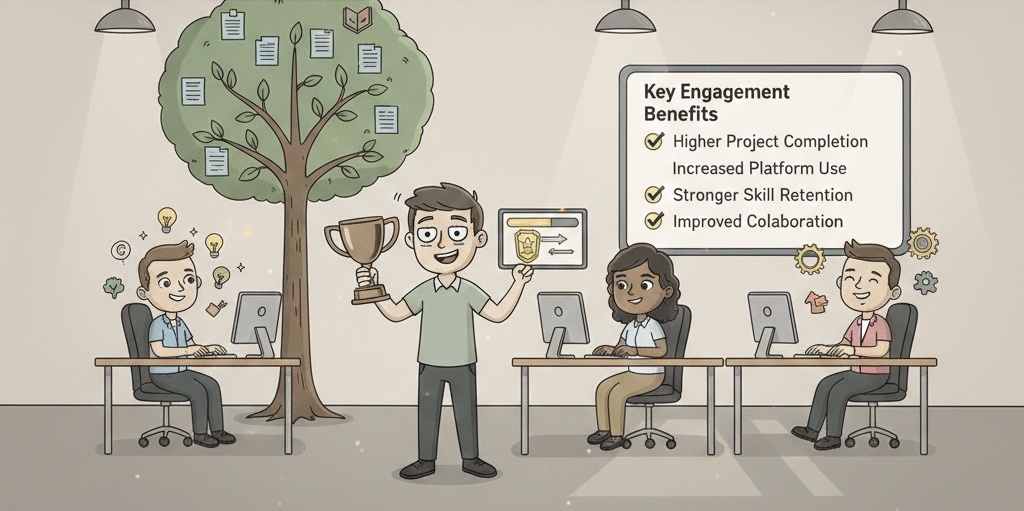
Key Engagement Benefits
- Higher course completion
- Increased login frequency
- Stronger retention
- Better participation
- Greater accountability
- Improved learning habits
Psychology Behind Gamification
Gamification taps into:
- Achievement motivation (levels, badges)
- Social comparison (leaderboards)
- Progress satisfaction (points, bars)
- Habit reinforcement (streaks)
- Curiosity (unlockable paths)
Top Student Engagement Techniques Using LMS Gamification
Effective LMS gamification techniques include XP points, badges, leaderboards, streaks, quests, missions, personalized avatars, and interactive rewards. These features encourage consistent participation and make learning more dynamic and motivating.
Below are 11 expanded, practical techniques you can implement today:
1. Points & XP (Experience Points) System
Points are awarded for completing assignments, attending live classes, participating in discussions, or finishing quizzes.
Why it works:
- Instant reward
- Visible growth
- Encourages consistency
Best practices:
- Give bonus XP for early submissions
- Combine XP with levels
- Display XP progress visually
2. Achievement Badges
Badges create a sense of accomplishment and acknowledge effort.
Types of badges:
- Performance badges
- Consistency badges
- Creativity badges
- Participation badges
Pro Tip:
Use badge tiers—Bronze → Silver → Gold → Platinum.
3. Leaderboards
Leaderboards introduce healthy competition and social motivation.
Popular leaderboard types:
- Weekly leaderboards
- Class leaderboard
- Skill‑specific leaderboard
Weekly leaderboard resets encourage even slow learners to participate and catch up.
4. Level-Up Learning Paths
Students level up as they complete modules. This mirrors game progression and builds commitment.
Benefits:
- Clear learning structure
- Encourages goal-setting
- Increases long-term engagement
5. Missions, Quests & Story-Based Learning
Lessons are transformed into missions with rewards for completion.
Example quest:
“Complete the Cyber Safety Mission to unlock Level 3.”
Storytelling increases emotional connection and memory formation.
6. Virtual Rewards & Redemption Stores
Students earn coins and redeem them for benefits like:
- Extra quiz attempts
- Access to bonus content
- Avatar accessories
- Custom certificates
Reward stores make learning fun and autonomous.
7. Gamified Discussion Forums
Reward students for:
- Posting solutions
- Helping peers
- Participating in debates
Forums become active learning environments.
8. Streaks & Consistency Rewards
Streak counters build learning habits by rewarding students for consistency.
Popular streak systems:
- Daily login streak
- Practice streak
- Weekly completion streak
9. Timed Challenges & Competitions
Timed tasks increase intensity and focus.
Examples:
- 2-minute memory challenge
- 1-day leaderboard challenge
- Team-based quiz battles
10. Personalized Avatars & Themes
Personalization strengthens emotional connection.
Ideas:
- Custom avatars
- Color themes
- Profile frames
- Achievement banners
11. Unlockable Learning Paths
Unlock modules gradually as students progress. This creates curiosity and a sense of reward.
Gamified Assessments & Progress Tracking
Gamified assessments use progress bars, checkpoints, timed scoring, animations, and adaptive difficulty to make tests more interactive and less stressful. This turns evaluation into a game-like experience that improves attention and effort.
Gamification Elements in Assessments
- Progress tracking bars
- Checkpoint-based quizzes
- Time-based star ratings
- Bonus rewards for accuracy
- Attempt-based scoring
- Instant feedback animations
These features encourage students to retake assessments and improve performance.
Common Challenges in LMS Gamification

Gamification can fail if poorly implemented. Challenges include meaningless rewards, low-quality designs, and unbalanced competition. Institutions must apply gamification deliberately to maintain learning value.
Common Challenges
- Overusing rewards
- Poor badge design
- Competition fatigue
- Lack of personalization
- Difficulty balancing fun vs. learning
Solutions
- Use meaningful gamification
- Personalize rewards
- Rotate challenges
- Implement weekly resets
- Train teachers to use gamified features
How Rannlab Implements Gamification in Modern LMS
Rannlab integrates gamification through customizable XP systems, AI-powered challenges, dynamic leaderboards, and a high-engagement UI designed for schools and enterprises.
Rannlab Gamification Features
- Fully customizable points, badges, levels
- AI-based adaptive challenges
- User-friendly reward store
- Story-based learning modules
- Teacher dashboards & analytics
- Gamified mobile and web interfaces
At Rannlab, we’ve seen institutions significantly improve learner engagement after adding gamification elements to their LMS. In one implementation, engagement increased as soon as leaderboards, badges, and streak counters were added. Students not only logged in more frequently but also began completing modules faster. Gamification, when applied strategically, creates long-term motivation and helps educators monitor progress more effectively.
Frequently Asked Questions
LMS gamification enhances engagement by making learning interactive and reward-driven. Features like points, badges, and leaderboards motivate students to participate regularly and complete tasks on time. The sense of achievement encourages long-term learning habits.
The most effective combination is points, badges, and weekly leaderboards. This trio provides instant reward, visible progress, and continuous motivation through friendly competition.
Yes. Gamification works for school students, college learners, and even working professionals. The key is to customize difficulty, rewards, and themes based on learner maturity.
No. Gamification enhances learning—it doesn’t replace it. It adds engagement, motivation, and fun to traditional content like videos, assessments, and assignments.
Conclusion
LMS gamification is a powerful way to improve student engagement by making learning interactive, motivating, and rewarding. With techniques like points, badges, streaks, leaderboards, and missions, institutions can transform passive learning into an active and enjoyable journey.
To build a fully gamified LMS tailored to your institution, explore Rannlab’s custom LMS development services.