
Introduction
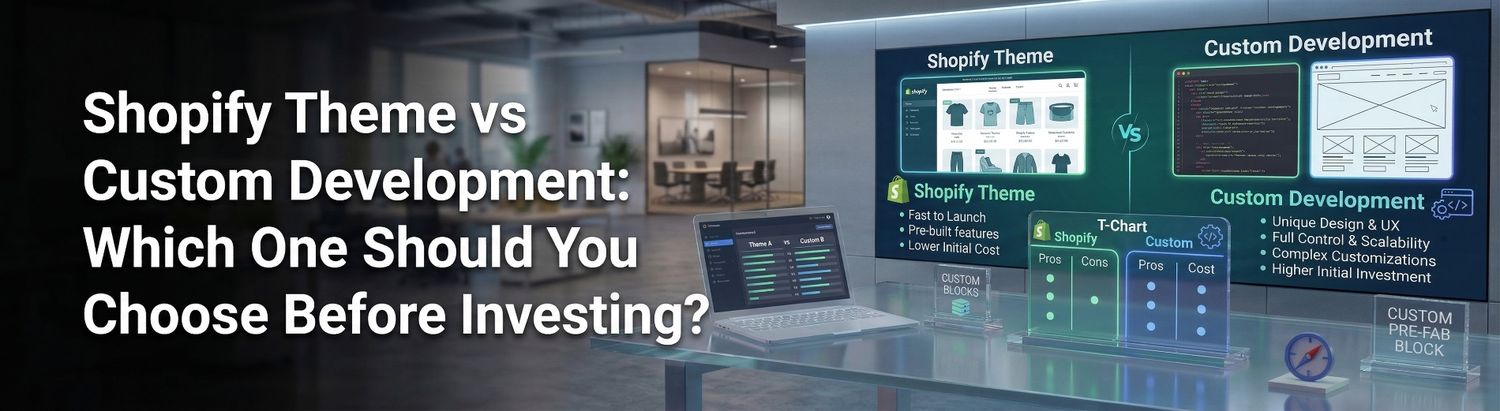
Shopify theme vs custom development is one of the most important searches users make right before committing money to a Shopify store. This decision affects not only how your store looks, but how it performs, scales, and converts traffic into revenue.
Many buyers choose a Shopify theme because it feels fast and affordable. Others invest in custom development assuming it guarantees success. Both assumptions can be costly if made without context. The right choice depends on your business model, growth goals, and acquisition strategy.
This guide breaks down the real trade‑offs, costs, risks, and ROI behind Shopify theme vs custom development—so you can make a confident, informed purchase decision.
What Shopify Theme vs Custom Development Really Means
Shopify theme vs custom development compares pre‑built Shopify templates with fully customized Shopify stores built for specific business goals.
Shopify Theme Development Explained
Shopify themes are pre‑designed templates available through the Shopify Theme Store or third‑party marketplaces. They are built to work for many businesses at once.
Key characteristics:
- Pre‑defined layouts
- Limited checkout and UX control
- Heavy reliance on apps
- Faster initial launch
Custom Shopify Development Explained
Custom Shopify development involves designing and coding a store from scratch using Liquid, Shopify APIs, and performance‑first UX principles.
Key characteristics:
- Tailored customer journeys
- Optimized page speed
- Fewer apps, cleaner code
- Designed for scalability
This is not a design preference. It’s an infrastructure decision.
Why Shopify Theme vs Custom Development Matters Before You Invest
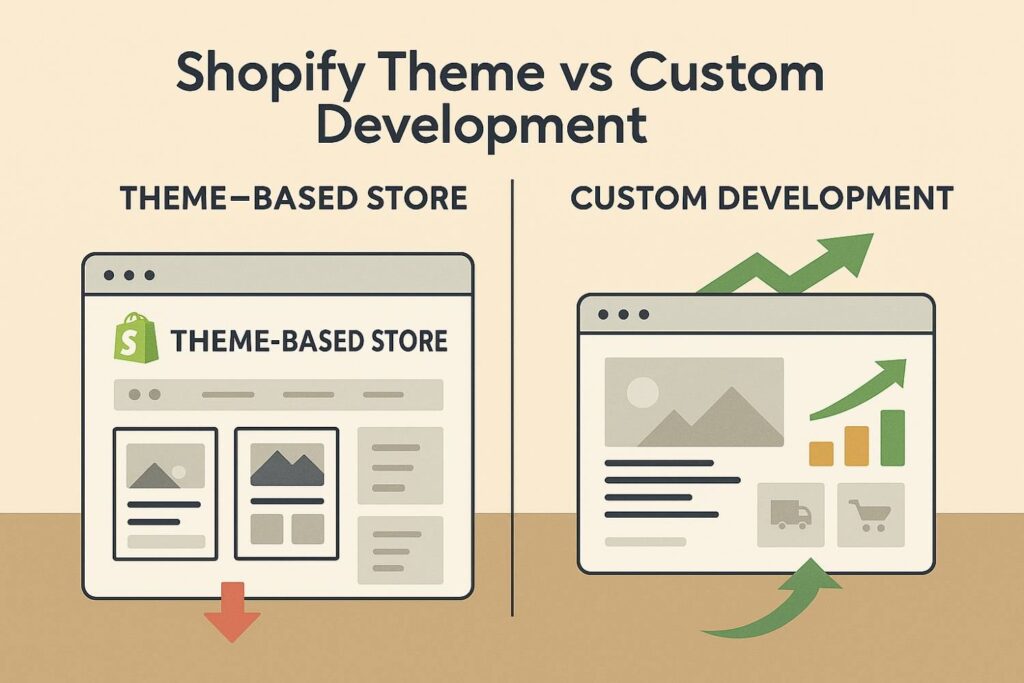
The Shopify theme vs custom development decision directly impacts conversions, ad efficiency, SEO scalability, and long‑term costs.
Most buyers focus on launch cost. Experienced buyers focus on lifetime value.
How This Choice Impacts Revenue
- Themes optimize for speed to launch
- Custom builds optimize for speed to scale
If you plan to invest in:
- Paid ads
- SEO
- Influencer marketing
- Retention programs
Your store’s structure will either amplify results or waste budget.
Marketing can’t fix a structurally weak store.
Shopify Theme Development: When It Makes Sense
Shopify theme development works best for early‑stage businesses validating ideas or launching with minimal complexity.
Ideal Use Cases
- New brands testing demand
- Single‑product or MVP stores
- Limited marketing spend
- Short‑term campaigns
Advantages of Theme‑Based Stores
- Lower upfront cost
- Faster go‑live timeline
- Easier maintenance
Limitations Buyers Must Understand
- Generic layouts used by competitors
- Limited CRO experimentation
- Performance drops with apps
- SEO structure constraints
Themes are built for average use cases—not aggressive growth.
Custom Shopify Development: When It Becomes the Better Investment
Custom Shopify development is ideal for businesses focused on conversion optimization, brand differentiation, and long‑term scalability.
Best Fit Businesses
- Scaling D2C brands
- Multi‑category or multi‑region stores
- SEO‑driven ecommerce
- High ad‑spend brands
- Subscription or B2B models
Benefits of Custom Shopify Development
- Conversion‑optimized UX
- Faster load times
- Custom checkout flows
- Clean app architecture
- Strong SEO foundations
Custom development reduces future rebuild costs.
Shopify Theme vs Custom Development: Side‑by‑Side Comparison
| Factor | Shopify Theme | Custom Shopify Development |
|---|---|---|
| Initial Cost | Low | Medium–High |
| Time to Launch | Fast | Moderate |
| Conversion Control | Limited | Full |
| Page Speed | Average | Optimized |
| SEO Flexibility | Moderate | High |
| Brand Differentiation | Low | Very High |
| Scalability | Limited | Excellent |
| Long‑Term ROI | Medium | High |
Cost vs ROI: What Buyers Should Actually Evaluate
In the Shopify theme vs custom development debate, ROI matters far more than upfront cost.
Smart Buyer Framework
Ask:
- Will this store support 2x growth?
- Can we optimize conversions easily?
- Will SEO improvements require rebuilds?
A cheaper store that fails to scale is not cost‑effective.
Hidden Risks Buyers Often Miss
Most Shopify buyers underestimate long‑term technical and marketing constraints when choosing themes.
Common Buyer Mistakes
- Overloading themes with apps
- Ignoring mobile checkout UX
- Choosing aesthetics over speed
- Underestimating SEO structure
App‑heavy themes slow down stores and increase abandonment.
FAQs
Is Shopify theme vs custom development a long‑term decision?
Yes. Most brands eventually move from themes to custom builds as they scale.
Can I start with a theme and upgrade later?
Yes, but migrations often cost more than building correctly upfront.
Does custom Shopify development help SEO?
Absolutely. Clean code and optimized structures improve Core Web Vitals.
Which option is better for conversion optimization?
Custom Shopify development offers significantly more CRO control.
Is custom development worth it for small businesses?
If growth and marketing are priorities, yes.
Making the Right Purchase Decision
The Shopify theme vs custom development decision should be based on where your business is headed—not just where it is today. Themes are excellent for testing ideas. Custom development is built for scaling revenue, improving conversions, and reducing long‑term friction.
If your goal is sustainable ecommerce growth, investing in the right Shopify foundation will save time, money, and opportunity cost.
Need help choosing the right Shopify approach?
Talk to Rannlab’s Shopify experts