Introduction
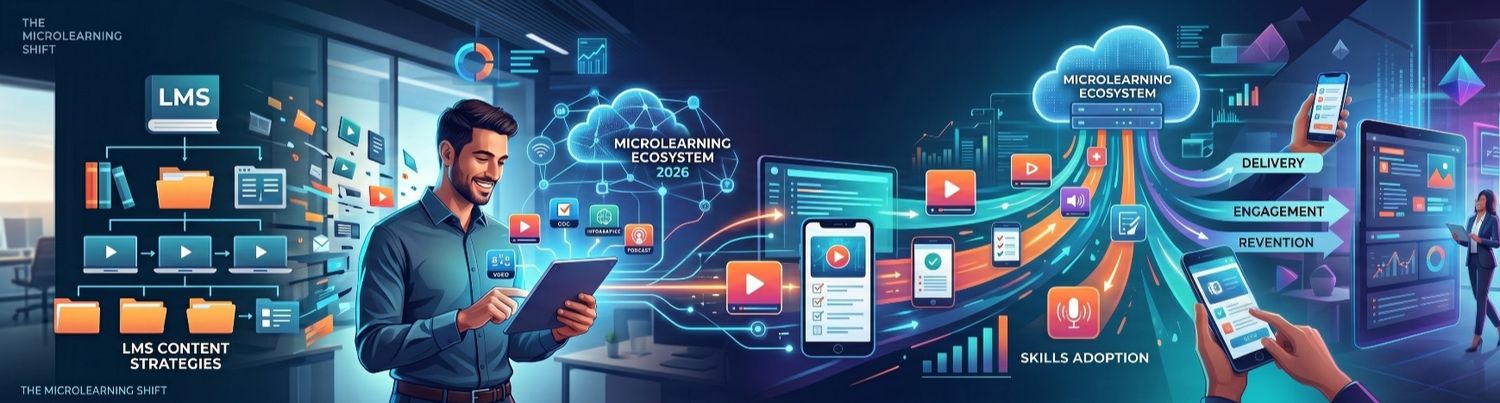
Microlearning LMS Content Strategies are transforming how businesses design, deliver, and optimize learning experiences in 2026. Learners today prefer quick, focused, and mobile-friendly learning formats. Organizations also aim for faster skill development, measurable ROI, and continuous learning. Microlearning bridges this gap by offering short, actionable modules that improve retention and performance. This guide explores why microlearning dominates LMS strategies, best formats, real industry outcomes, and how companies can implement microlearning-first training ecosystems with Rannlab.
What Is Microlearning in LMS?
Microlearning in LMS platforms refers to delivering training through short, focused learning modules that typically last 3–7 minutes. These micro-units improve retention, reduce cognitive overload, and support mobile-first digital learning.
Microlearning breaks long-form training into smaller, manageable segments. Instead of long videos or bulky PDFs, learners consume content in crisp, targeted formats like short clips, scenarios, flashcards, and micro-quizzes. LMS platforms in 2026 now support microlearning workflows such as learning paths, spaced repetition reminders, AI-driven recommendations, and bite-sized skill modules.
Microlearning’s effectiveness comes from how the human brain processes information. Learners absorb concepts faster in short bursts, making microlearning ideal for onboarding, compliance, product knowledge, soft skills, customer service, and leadership training.
Why Microlearning Is Transforming LMS Content Strategies
Microlearning transforms LMS content strategies by improving engagement, boosting retention, accelerating skill-building, and reducing development time. It fits modern learner behavior and business demands.
Today’s workforce has limited time for long training programs. Employees want fast, relevant knowledge they can apply immediately. Microlearning solves this by offering high-impact modules that deliver a single learning outcome quickly.
Key reasons driving this transformation:
- Higher learner engagement
Bite-sized modules maintain attention and reduce fatigue. - Better retention
Shorter learning improves memory encoding. - Faster content updates
Revising micro-modules is easier than rewriting entire courses. - Fits busy schedules
Training becomes digestible during breaks or micro-moments. - Mobile-first advantage
Microlearning aligns with smartphone-based learning. - Performance-driven
Learners can instantly apply knowledge on the job.
With AI integrations, LMS platforms now recommend microlearning pathways based on job roles, skill gaps, performance data, and past learning behavior.
Best Microlearning Formats for LMS in 2026
Top microlearning formats include short videos, scenario simulations, gamified challenges, flashcards, AI-powered quizzes, infographics, and micro-courses designed for rapid consumption.
Microlearning supports varied learning styles through multiple formats designed for high engagement:
Popular Microlearning Formats
- Short instructional videos
- AI-driven micro-quizzes
- Scenario-based interactions
- Flashcards for spaced retrieval
- Gamified learning challenges
- Infographics summarizing concepts
- Micro-podcasts
- Chat-based simulations
Comparison Table
| Format | Best For | Duration | Engagement |
|---|---|---|---|
| Short Videos | Quick skill demos | 2–3 mins | High |
| Micro-Quizzes | Reinforcement | 1–2 mins | Very High |
| Scenario Simulations | Real-world practice | 3–5 mins | Very High |
| Flashcards | Memory recall | 30 sec–1 min | High |
| Infographics | Overview & clarity | 1 min | Medium |
| Gamified Missions | Motivation | 3 mins | Very High |
Use scenario-based microlearning for compliance and sales—learners remember decisions better through interactive experiences.
How Microlearning Improves Corporate Learning Outcomes
Microlearning improves corporate outcomes by increasing retention, boosting engagement, reducing cognitive overload, and enabling continuous learning through fast, actionable modules.
Organizations adopting microlearning-first LMS strategies report measurable improvements:
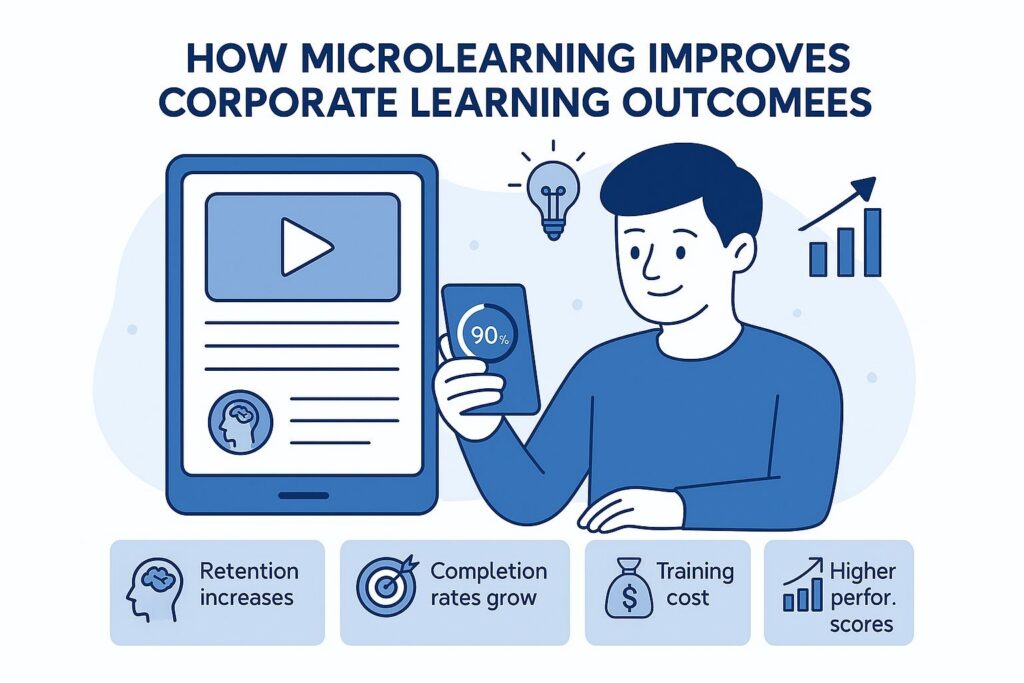
Training Impact Metrics
- Retention increases by up to 90%
- Completion rates grow 40–60%
- Training cost drops significantly
- Reduced employee downtime
- Higher post-training performance scores
Microlearning’s flexibility allows learning to happen in micro‑moments—during travel, breaks, or after work. This dramatically improves training adoption and ensures long-term learning reinforcement.
Building a Microlearning-First LMS Strategy
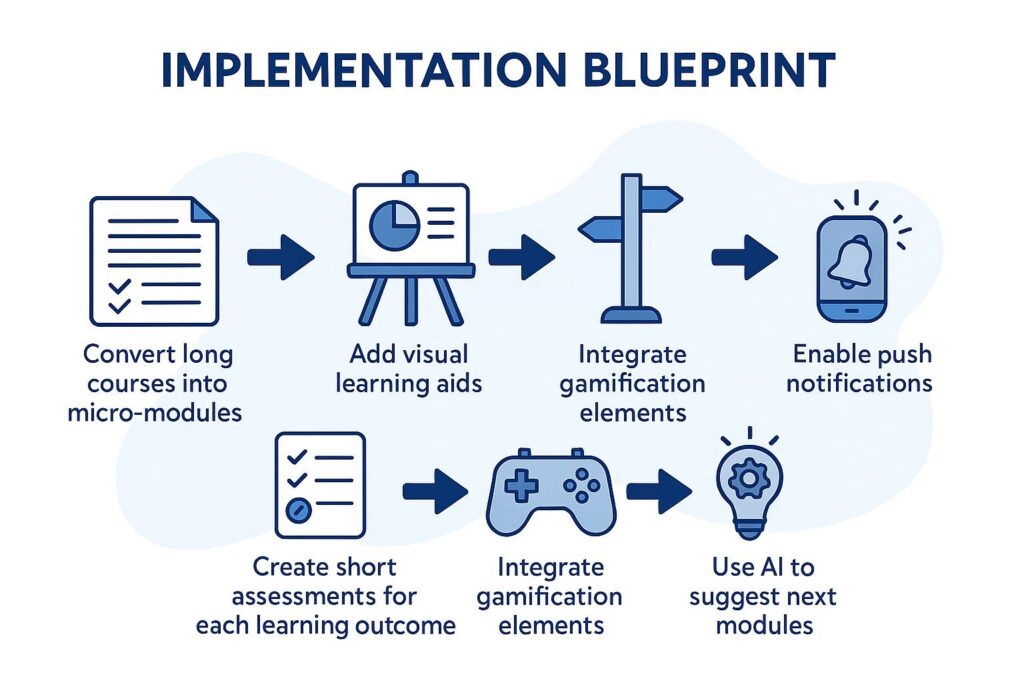
A microlearning-first LMS strategy focuses on modular content, AI-driven personalization, mobile-first UX, spaced reinforcement, and learner analytics.
A successful microlearning LMS strategy involves:
Core Strategy Components
- Modular Content Structure
- 3–7 minute learning objects
- Spaced learning triggers
- Micro-assessments after each module
- Mobile-first LMS interface
- AI-powered recommendations
- Behavioral analytics tracking
Rannlab Insight
Organizations using microlearning with AI-driven suggestions see 2.5× engagement and 3× faster skill acquisition.
Rannlab’s Modern Approach to Microlearning Ecosystems
Rannlab designs microlearning ecosystems using modular content, AI personalization, mobile-first delivery, and analytics-driven iteration for improved performance.
Rannlab helps organizations transition from traditional learning models to microlearning architectures. Our LMS solutions support:
- Microlearning-ready content structures
- AI-driven learning recommendations
- Mobile-first training experiences
- On-the-job workflow training
- Gamification systems
- Reinforcement learning cycles
- Custom dashboards for performance tracking
Rannlab ensures training becomes continuous, engaging, and measurable.
FAQs
Microlearning LMS Content Strategies involve structuring training into short, focused modules that improve engagement, reduce cognitive load, and increase retention.
The ideal module length is 3–7 minutes, depending on learning goals.
Yes. Breaking complex topics into micro-steps improves clarity and application.
Absolutely. It simplifies dense content and boosts retention and completion.
Because learners want mobile, on-demand, flexible training that fits their schedules.
Conclusion
Microlearning LMS Content Strategies are essential for delivering training that is flexible, engaging, and performance-driven. Organizations adopting microlearning-first approaches achieve higher retention and faster skill growth.
If you’re ready to transform your training ecosystem with microlearning, contact Rannlab Technologies to build a future-ready LMS.
